Sunday Roast, Wednesday Pace: The 20-Minute One-Tray Chicken Dinner for One or Two
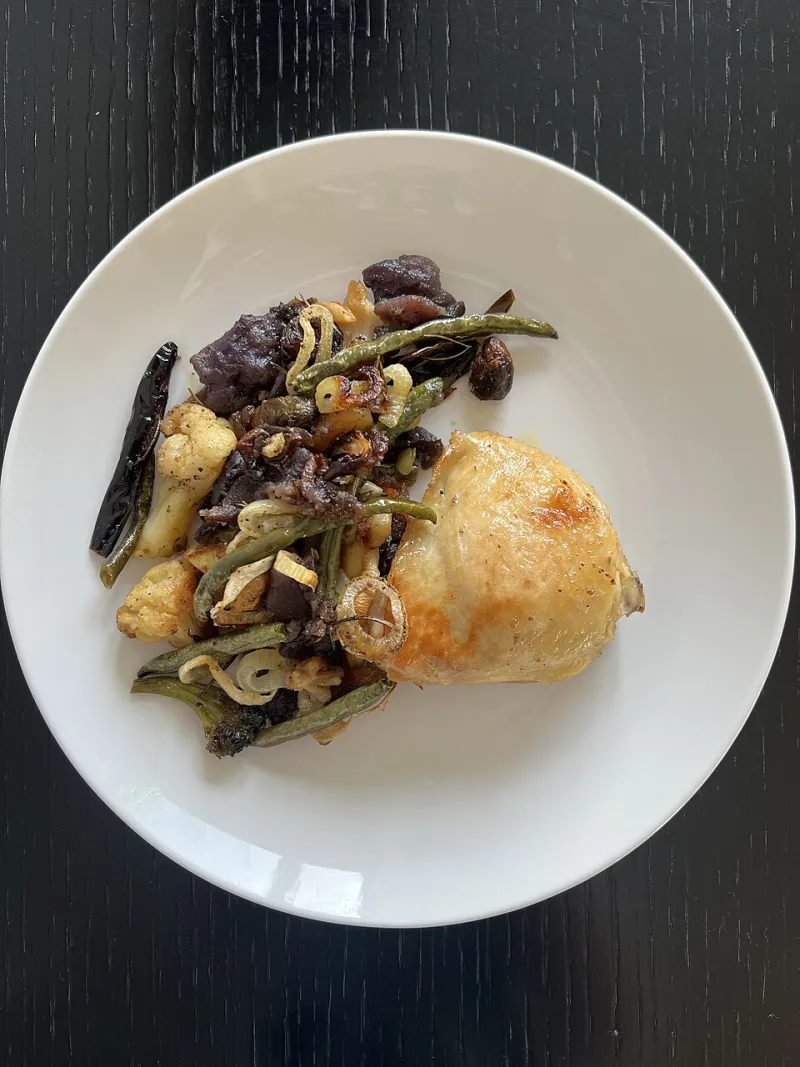
Photo: HaJunkiyada, CC BY-SA 4.0, via Wikimedia Commons
A whole roast chicken needs eighty minutes and a bit of nerve. You have twenty and possibly a child who needs a bath. So let's be honest about what this is: a credible Sunday-roast-shaped dinner, on one tray, in the time it takes to watch half a quiz show.
No trussing. No basting. No three-pan operation. And yes, there will be frozen Yorkshire puddings, and we are not going to pretend otherwise.
The honest maths on twenty minutes
You cannot roast a whole bird in twenty minutes without it turning into a health hazard. What you can do is roast chicken thighs — skin on, bone in, or boneless if you are truly up against it — at a high heat alongside small, par-cooked potatoes. Thighs are forgiving, stay juicy and go properly crisp at 220C.
The second option, for the evenings when even that feels like effort: buy a hot roasted chicken from the supermarket on the way home. That is not cheating, it is logistics. Blast it for eight minutes at high heat to crisp the skin, build gravy from the juices in the tray, and nobody at the table will ask questions.
What you need
- One large baking tray — the biggest one that fits
- One chopping board, one knife, one bowl
- A kettle
- A microwave (for the potato head start; this is the whole trick)
- A jug and a fork
That is it. If you own a roasting tin, a spatula and a sieve, you are over-equipped.
The shopping list for two
- 4 chicken thighs, skin on — about £3
- 500g potatoes; Maris Piper or King Edward if you can, but a bag of baking potatoes works fine
- 1 tsp semolina or a spoon of plain flour (optional, but it is the crisp secret)
- 2 tbsp oil — rapeseed or sunflower, not olive, which smokes
- Gravy granules
- A green thing: Tenderstem, sprouts, green beans or frozen peas
- Optional: 4 frozen Yorkshire puddings
All in, roughly £5 for two — less if the chicken is on offer.
The twenty-minute timeline
| Clock | Do this |
|---|---|
| 0:00 | Oven on at 220C fan (240C conventional, gas 9). Empty tray in with 2 tbsp oil. Kettle on. |
| 0:02 | Chop potatoes into 2cm cubes — skin on, no peeling, we are busy. Bowl, splash of water, cover, microwave 5 minutes on high. |
| 0:07 | Drain properly. Shake the potatoes in the bowl with salt, pepper and the semolina until the edges look floury and beaten up. That roughness is what crisps. |
| 0:08 | Tray out. Tip potatoes onto the hot oil — it should sizzle — and spread them out. Back in, top shelf. |
| 0:10 | Season the thighs generously. Pull the tray out, nestle the chicken skin-side up among the potatoes, back in. Timer for 12 minutes. |
| 0:14 | Make the gravy in a jug (below). Boil the kettle again if the greens are going in the microwave. |
| 0:18 | Add quick greens to a corner of the tray — Tenderstem and halved sprouts both work — or microwave them. Frozen Yorkshires on a shelf above. |
| 0:22 | Chicken out. Rest on the board for 3 minutes. This is not optional; it is what keeps it juicy. |
| 0:25 | Plate up. Pour the resting juices into the gravy. Eat. |
That is twenty-five by the clock, but twenty of those minutes are oven time and you are hands-on for about seven. If you are strict about the headline number, start the potatoes in the microwave before you take your coat off.
The gravy cheat sheet
Restaurant gravy takes an hour and a bottle of wine. This takes ninety seconds and tastes like you tried.
- Two heaped teaspoons of gravy granules in a jug.
- 250ml boiling water. Whisk until smooth.
- Tip the tray juices in — scrape with a spatula, do not leave that flavour behind.
- A teaspoon of Marmite or a splash of soy sauce for depth. A glug of whatever white wine or apple juice is open, if anything is.
- A knob of butter at the end, whisked in until it goes glossy.
Got a spoon of onion marmalade or a bit of leftover roast veg? Chuck it in and call it pan gravy.
Yorkshire pudding, without the guilt
Frozen ones, four for about £1.30, straight onto the top shelf for the last eight minutes. They come out crisp, they hold gravy, and nobody has ever reliably picked them out in a blind test. We have tried.
If you want the real thing on an actual Sunday: 3 tbsp plain flour, 1 egg, 100ml milk, a pinch of salt, into a screaming-hot tin with a little oil per hole, twelve minutes at 220C, and do not open the door. But that is a different article.
The three things that actually make this work
Par-cooking the potatoes. Five minutes in the microwave changes everything. Raw cubes need thirty-five minutes to crisp; par-cooked ones need fifteen. It is the single biggest shortcut in this entire method.
A screaming-hot tray. Oil in the tray, tray in the oven, potatoes into hot oil. Cold tray, sad potatoes.
Semolina or flour. A light dusting after draining gives you the craggy, glassy exterior that roast potatoes are supposed to have. It is the difference between roasted and roasted properly.
What we are not doing
We are not making stock. We are not peeling potatoes. We are not adding a bread sauce or a second veg. We are not attempting a joint of beef, because that is a weekend project with a thermometer involved.
And we are absolutely not apologising for the gravy granules.